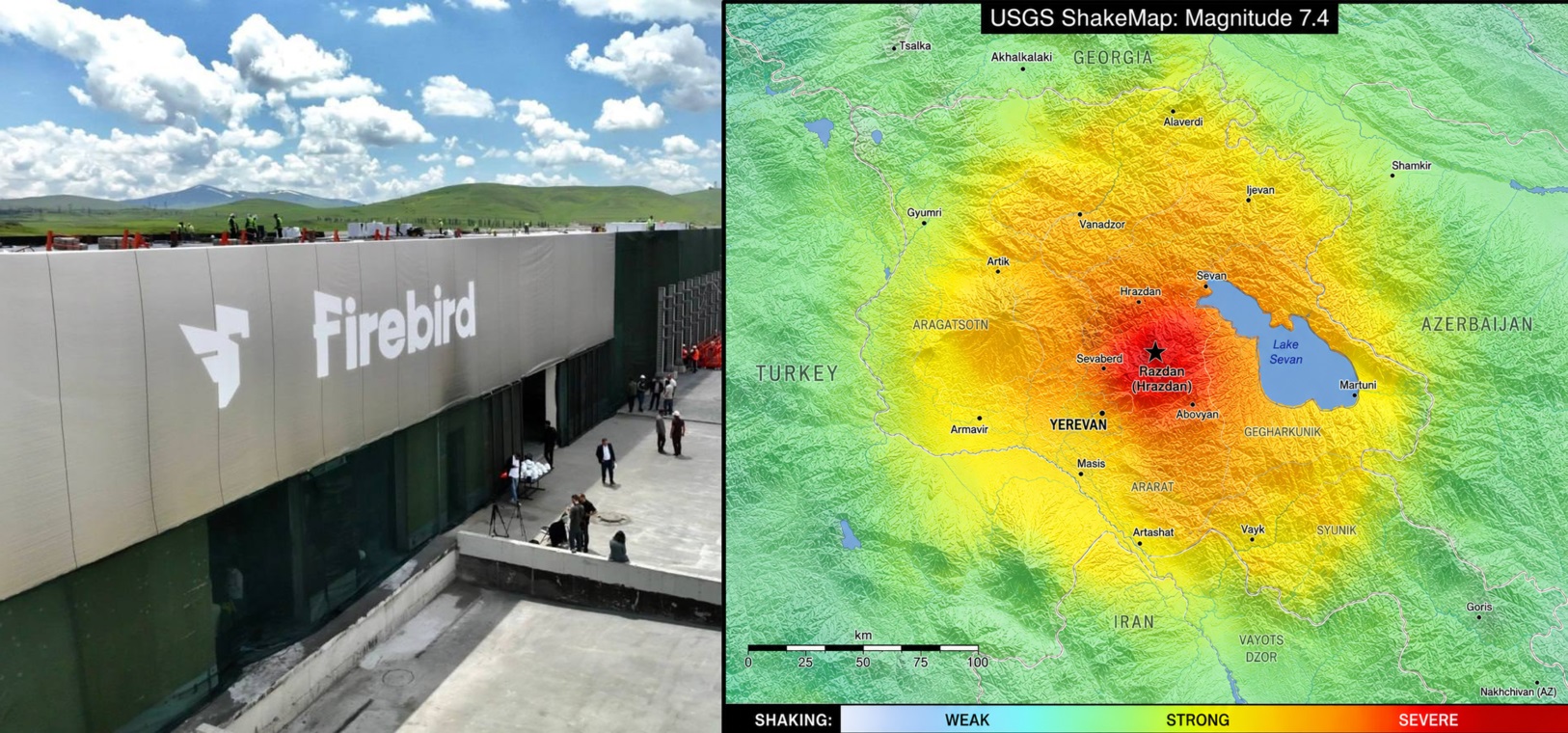

Armenia has been working to establish itself as a new destination for large-scale AI infrastructure. At the center of this effort is the Firebird project, which aims to build one of the region’s largest AI clusters using thousands of NVIDIA GPUs. The company plans to invest around $5 billion in the first two phases of the data center, with the initial phase originally scheduled to go live on July 5, 2026. However, seismic concerns in the Kotayk region, where the facility is being built near Hrazdan, are now casting doubt on that timeline.
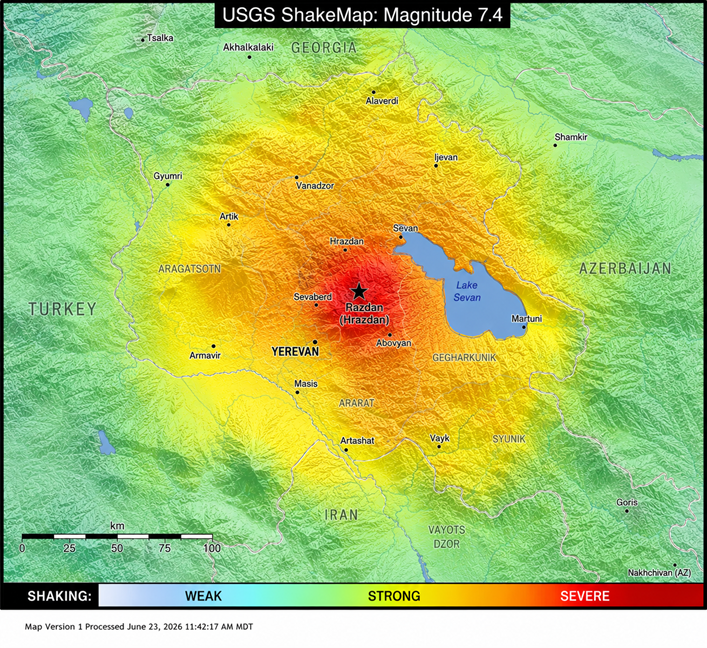
According to analysis from Armenia’s National Survey for Seismic Protection, confirmed by the United States Geological Survey (USGS), a magnitude 7.4 earthquake could occur in the area within the next 35 days. An event of this scale would rank among the most powerful in the country’s modern history and could significantly disrupt both local communities and major technology projects. The potential impact on the Firebird data center is particularly notable given the scale and sensitivity of the infrastructure involved.
Modern AI training clusters present unique challenges when it comes to seismic resilience. Facilities built around dense deployments of NVIDIA GPUs rely on complex liquid cooling systems and run continuous, long-duration training workloads. Even moderate ground motion can trigger emergency shutdowns, damage hardware, or interrupt months of computational work. Unlike traditional enterprise data centers, these high-density AI environments are far more difficult to bring back online quickly after a seismic event, making downtime especially costly.
Armenia sits in a tectonically active zone formed by the collision of the Arabian and Eurasian plates. The country’s vulnerability was demonstrated in devastating fashion on December 7, 1988, when the Spitak earthquake, measuring approximately 6.8 to 7.0 in magnitude, killed tens of thousands of people and destroyed large parts of northern Armenia.
Similar risks to advanced computing infrastructure have been observed elsewhere. During the 2011 Tōhoku earthquake in Japan, the RIKEN K supercomputer — one of the world’s most powerful systems at the time — suffered major disruptions despite Japan’s stringent seismic standards. The incident highlighted how even well-engineered high-performance computing facilities can face prolonged recovery periods following a major seismic event.
Armen Der Kiureghian, a leading expert in earthquake engineering and former president of the American University of Armenia, has questioned the decision to locate such a facility in the region. He noted that it remains unclear why approval was granted to build a data center in an area with such high seismic hazard, and expressed doubt that the first phase would be ready by the planned July 5 launch date.
The Firebird project underscores a broader challenge facing the AI infrastructure sector. As companies and governments race to deploy massive GPU clusters, they are increasingly confronted with difficult decisions about where to site these highly sensitive and capital-intensive facilities. For projects of this scale, seismic resilience is no longer a secondary consideration — it directly affects operational reliability, project economics, and long-term viability.